Cities are full of spaces that sit idle: vacant retail shopfronts, empty offices, tired heritage buildings, underpasses, vacant blocks, loading docks and old warehouses. At the same time, creatives who desperately need affordable space to work, rehearse and present their work are increasingly priced out of global cities. This tension – abundant vacant space on one hand, and lack of accessible creative space on the other – sits at the heart of the “creative space paradox”.
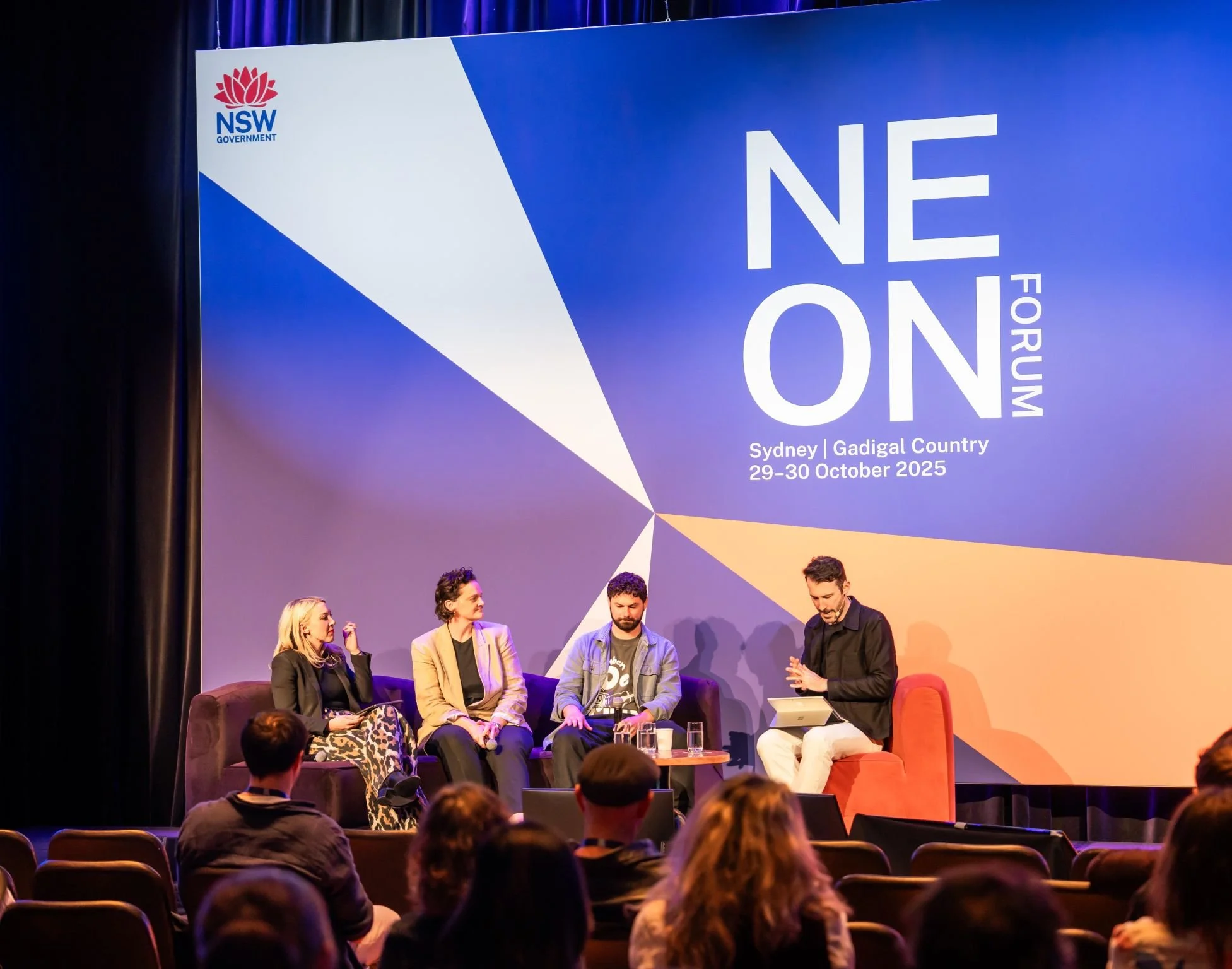
At the 2025 NEON Night Time Economy Forum in Sydney, Reactivate Co-Founder and Director Andrew Coward hosted a panel titled “Hand over the keys: Unlocking creative spaces” with Ash Nicholson (CBRE), Sean O. (Fever) and Kate Wickett (City Recital Hall, Sydney). The discussion explored how cities can better utilise vacant and underused space to support culture and the night-time economy, and why this is rarely as simple as just handing over a set of keys.
The panel unpacked a series of practical takeaways. Working collaboratively with landlords, REITs and asset owners is critical, and creatives need confidence that they will have access to space for a clear, defined period – short-term leases alone are often not enough. Traditional property models are not always well suited to vacant space activation, particularly where long-term leases dominate. Turning empty space into creative space requires infrastructure, capex and a basic level of compliance: operators cannot simply “rock up and activate” without power, amenities, safety measures and approvals in place. Creatives in turn need supportive partnerships and fair remuneration when they are activating spaces on behalf of asset owners.
The conversation also pointed to the broader precinct and policy opportunities. Vacant shopfronts, rear laneways and overlooked nooks in the public realm can all contribute to more vibrant districts when brought into use. NSW’s vibrancy reforms are helping to make activation easier, though compliance roadblocks remain. Local governments have an important role to play through enabling policy structures, streamlined approval pathways, englobo event development applications and “plug and play” programs that lower the barriers to using space. For the night-time economy, making better use of vacant and underutilised space – including underused cafés, lobbies, car parks and office floors – represents a powerful opportunity to bring cities and places to life in new and creative ways, in partnership with the creative community.